

For a Shia traveller, the journey of Ziyarat is not merely a physical movement across borders; it is a profound journey of the heart. While our souls are perpetually tethered to the golden domes of Karbala, Najaf, Mashhad, and the silent sands of Baqi, the legacy of the Ahl al-Bayt (AS) has left its spiritual imprint across the globe.
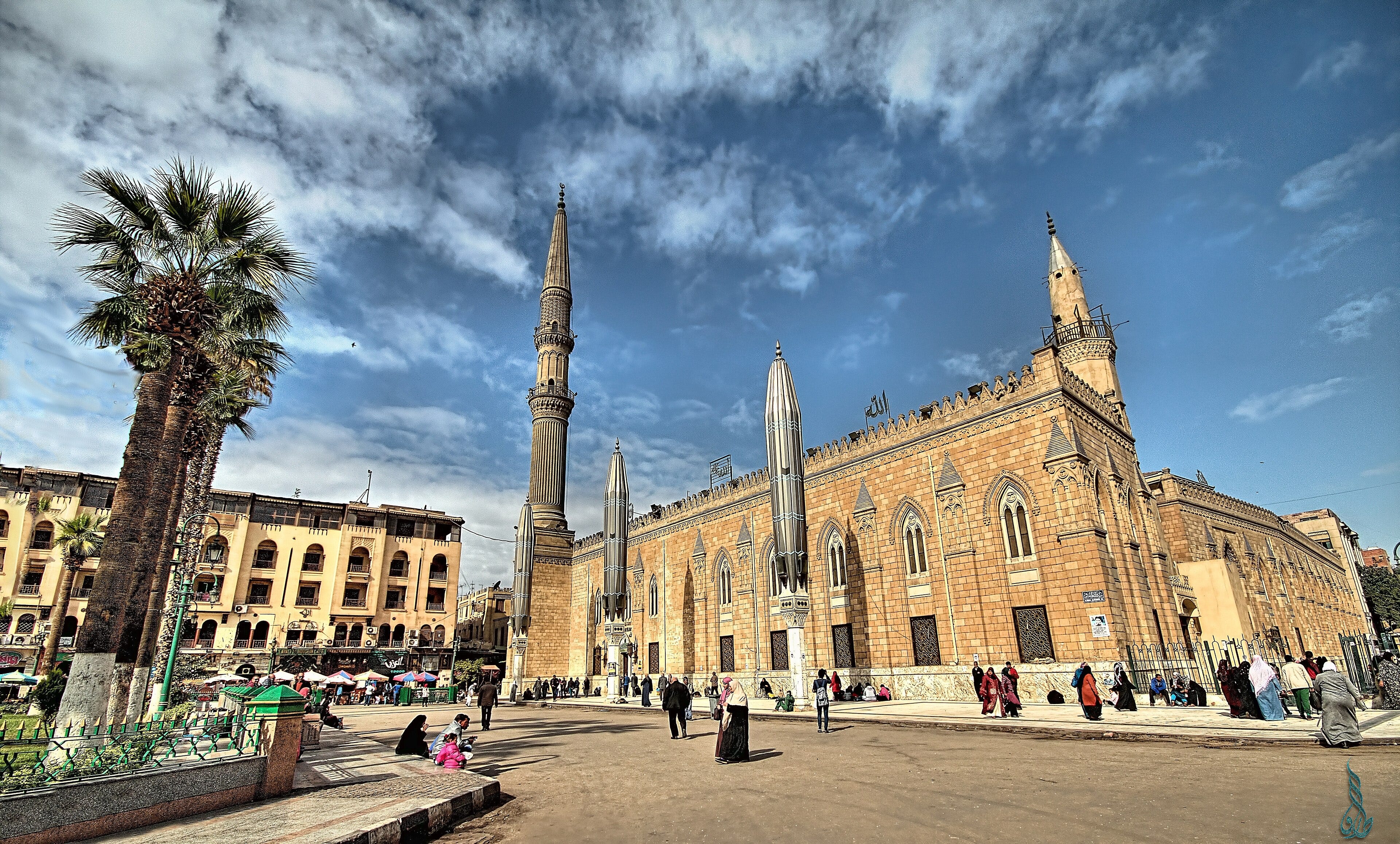
One of the most profound and emotionally heavy sites outside of the traditional pilgrimage routes is Masjid Ra’s al-Husayn (The Mosque of the Head of Husayn) located in the bustling, historic heart of Islamic Cairo, Egypt. For those charting their paths on Shia Journeys, understanding the history and significance of this magnificent mosque offers a new dimension to the remembrance of Ashura.
The Journey of the Sacred Head
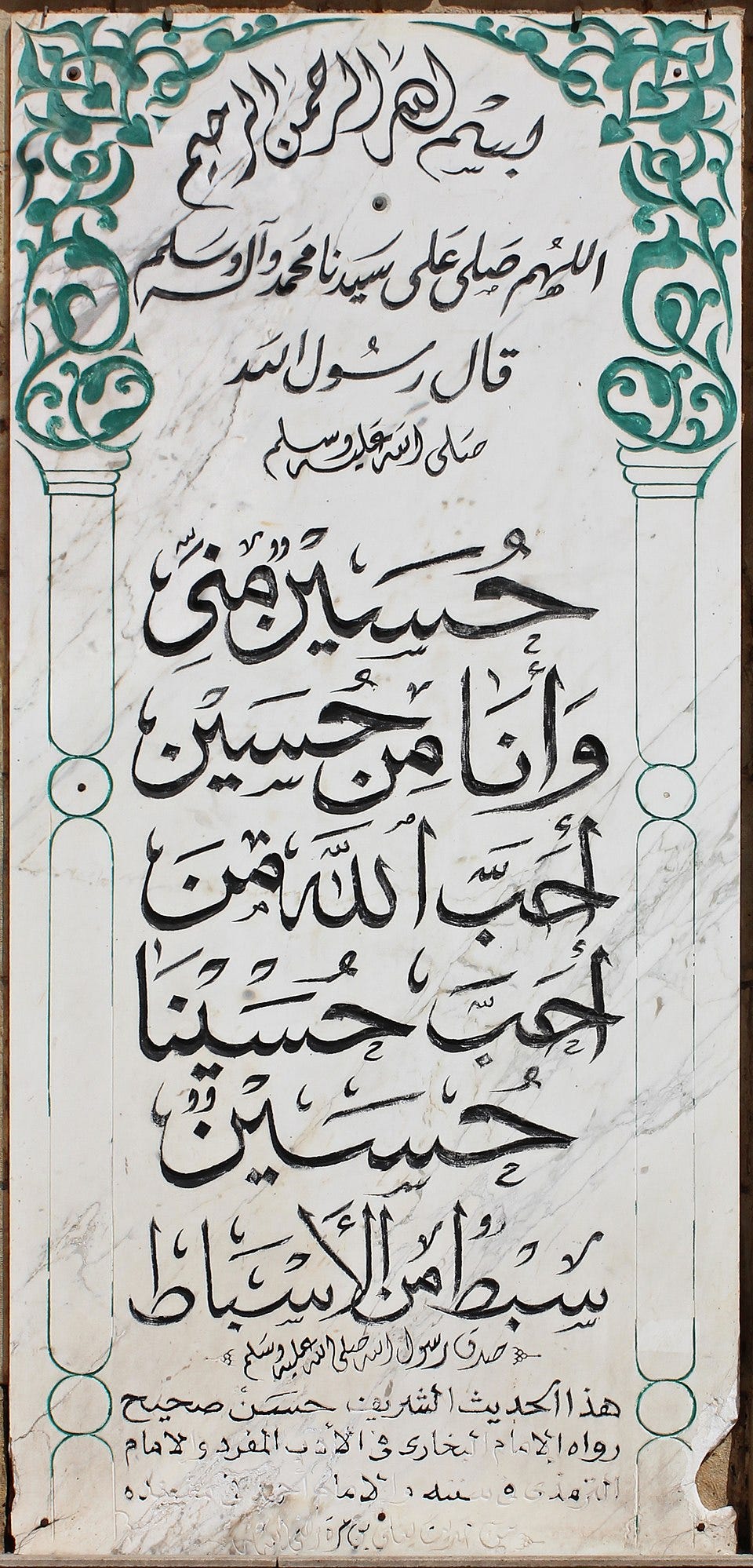
Imam Hussein Hadith inscription, Al-Hussein Mosque, Cairo. Bismillah Al-Rahman Al-Rahim (In the name of God the most merciful)
Blessings of God and peace be on our Lord muhammad and his kin
The messenger of God peace be upon him said:
Hussain is of me, and I’m from him
He who loves hussein shall be loved by God
Hussein is one of my branches
“The messenger of God surely spoke the truth”
This Hadith is sahih (correct) told by imam bukhari in his work “Al-Adab Al-Mufrad” and imam termadhi. .. (rest unclear).
To understand the significance of Masjid Ra’s al-Husayn, we must revisit the heart-wrenching aftermath of the 10th of Muharram, 61 AH. Following the tragedy of Karbala, the sacred head of Imam Husayn (AS) was taken by the forces of Yazid on a sorrowful journey—from Kufa to Damascus, displayed as a trophy of tyranny while the noble women and children of the Prophet’s household were paraded in chains.
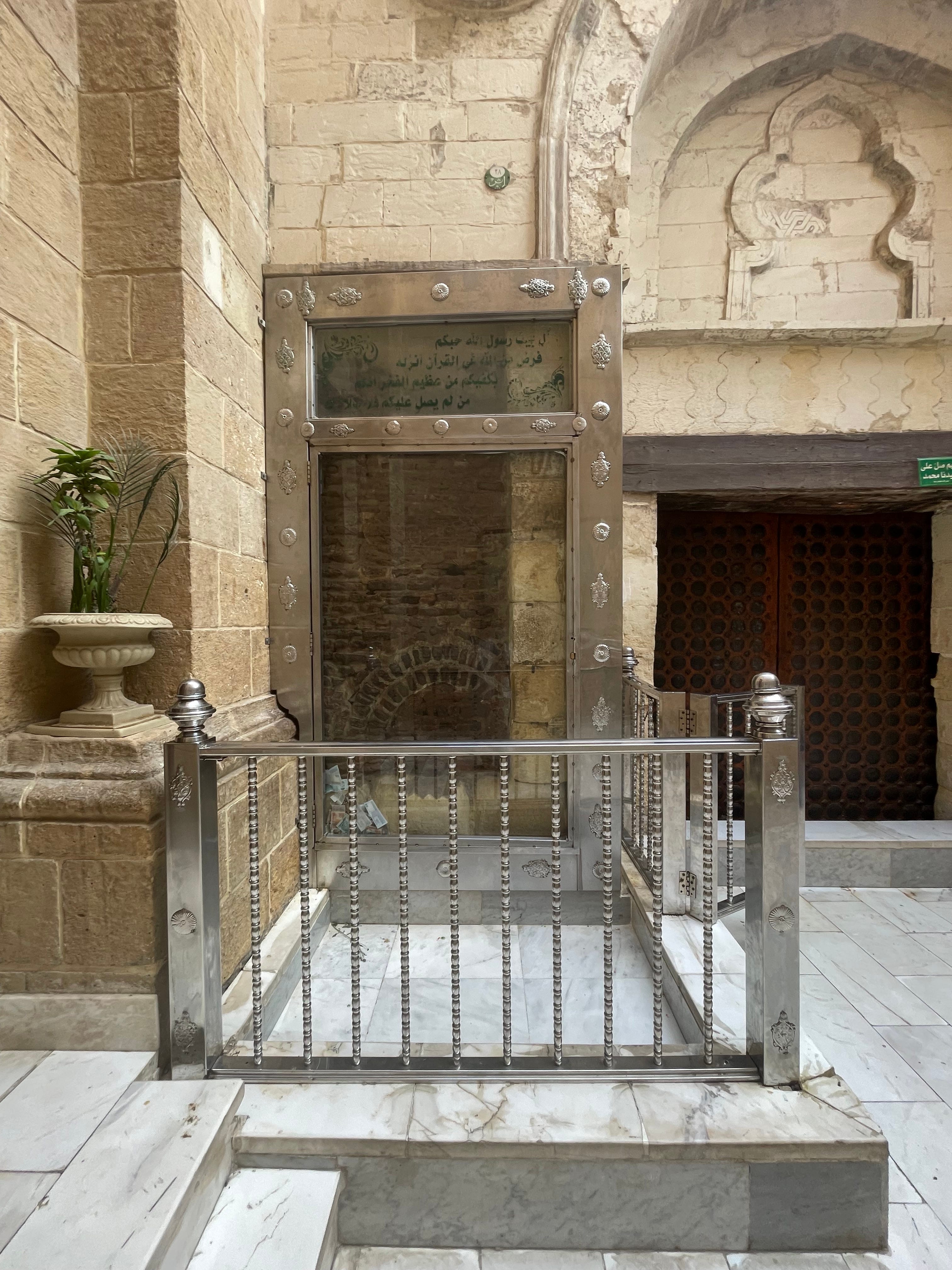
According to the Twelver Shia consensus, Imam Ali Zayn al-Abidin (AS) was ultimately able to retrieve the sacred head and return it to Karbala, reuniting it with the Imam’s holy body on the day of Arbaeen. However, the physical locations where the head was kept along that journey, and the places historically believed to have housed it later, became permanent monuments of grief and devotion—known as Maqams.
The History of the Cairo Mosque
The story of the Cairo mosque begins centuries after Ashura. Historical accounts note that during the Abbasid era, the head (or a holy relic representing it) was believed by some to have been hidden in Ashkelon (in modern-day Palestine) to protect it from desecration.
In the 12th century (1153 AD), as the Crusader armies advanced upon the Levant, the Ismaili Fatimid rulers of Egypt—who claimed direct descent from Lady Fatima (SA)—sought to rescue the sacred relic. With immense reverence, it was transported to Cairo. The Fatimids built a magnificent shrine and mosque to house it, ensuring that the legacy of Imam Husayn (AS) would serve as the spiritual beating heart of their capital.
The Pilgrim’s Experience Today
Today, Al-Hussein Mosque stands in the vibrant Khan el-Khalili district. As a Shia pilgrim navigating the narrow, ancient streets of Cairo, the sudden appearance of the mosque’s grand architecture is a breathtaking sight.
When you step inside, the atmosphere is electric with devotion. While Egypt is a majority Sunni nation, the Egyptian love for the Ahl al-Bayt is legendary. Here, sectarian lines blur in the face of shared sorrow and profound respect.
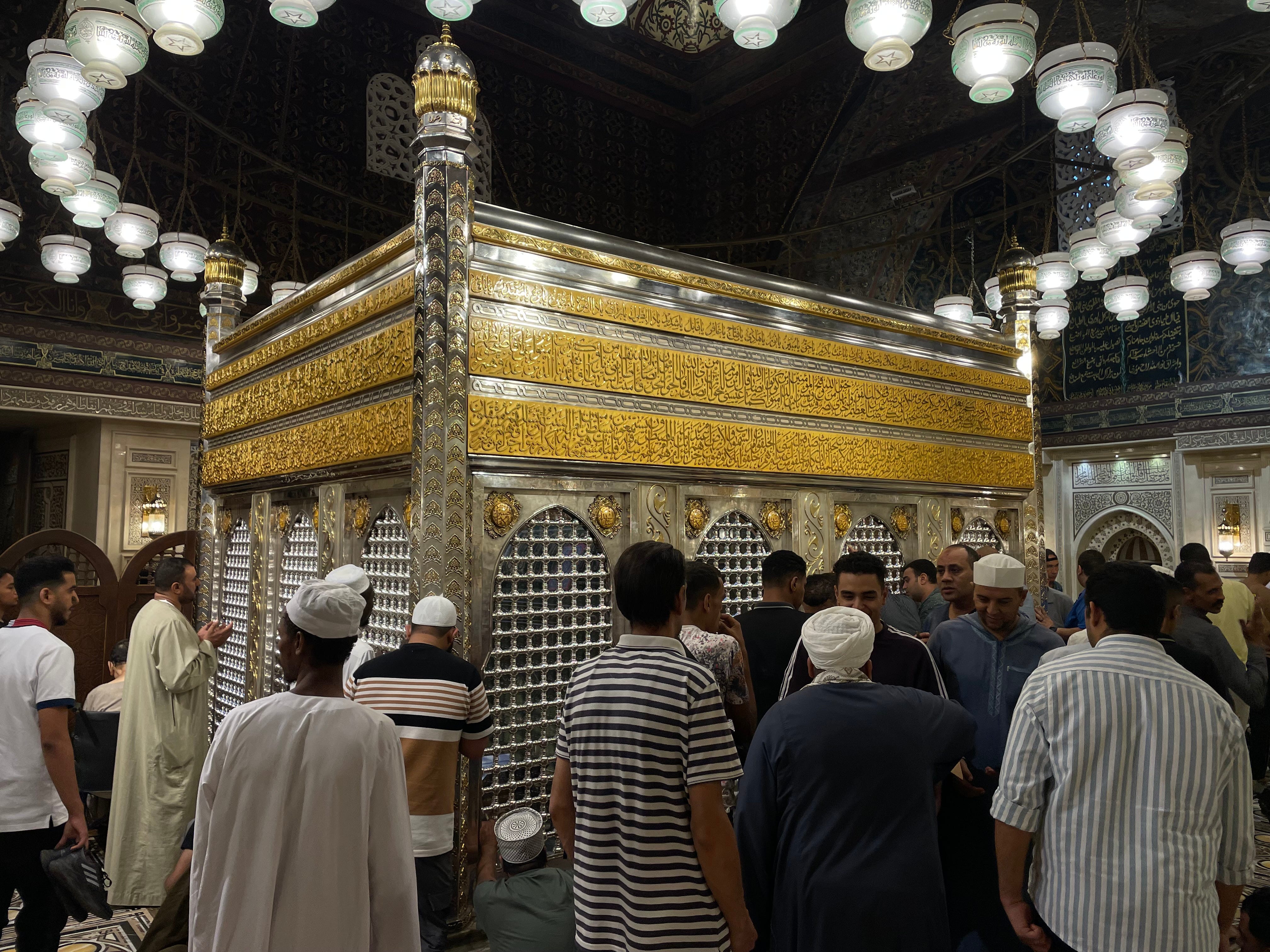
The Zarih: At the heart of the mosque lies the zarih (silver grille enclosure) marking the Maqam. Pilgrims from all walks of life press against the silver, weeping, reciting poetry, and seeking intercession. The scent of musk and rosewater fills the air, echoing the shrines of Iraq and Iran.
The Relics: The mosque is also home to a collection of sacred Islamic relics, including ancient manuscripts of the Holy Quran, further elevating the spiritual gravity of the site.
The Gathering of Lovers: Visiting on a Thursday evening or during the days of Muharram reveals a profound sight. You will witness locals reciting the Quran, distributing water in the name of the parched lips of Aba Abdillah (AS), and sharing stories of the Prophet’s grandson.
A Valid and Vital Ziyarat
For the Shia traveller, a theological question often arises: If we believe the head was returned to Karbala, what is the purpose of visiting Cairo?
In the tradition of Ziyarat, a Maqam—a place where a holy person stood, rested, or where their relics were kept—absorbs the spiritual light of that presence. Just as we visit the Maqam of the Sacred Head in the Umayyad Mosque in Damascus, visiting Masjid Ra’s al-Husayn in Cairo is a testament of loyalty. It is a place to recite Ziyarat Ashura, to shed tears for the captives of Karbala, and to witness how the light of Imam Husayn (AS) could never be extinguished by his enemies.
Yazid sought to parade the head of Imam Husayn (AS) to instill fear and demonstrate his power. Instead, every place the sacred head rested became a sanctuary of love, defying tyranny for millennia.
Adding Cairo to Your Journey
Masjid Ra’s al-Husayn is a beautiful reminder that the message of Karbala belongs to the world. For those looking to expand their spiritual itineraries beyond the Middle Eastern epicentres of Shia Islam, Cairo offers a profound experience.
Standing before the Maqam in Egypt, a pilgrim realises the ultimate victory of Ashura: the enemies of Husayn (AS) have been lost to the dust of history, but the name of Husayn (AS) continues to reign over the hearts of millions, building sanctuaries of light wherever his memory resides.