

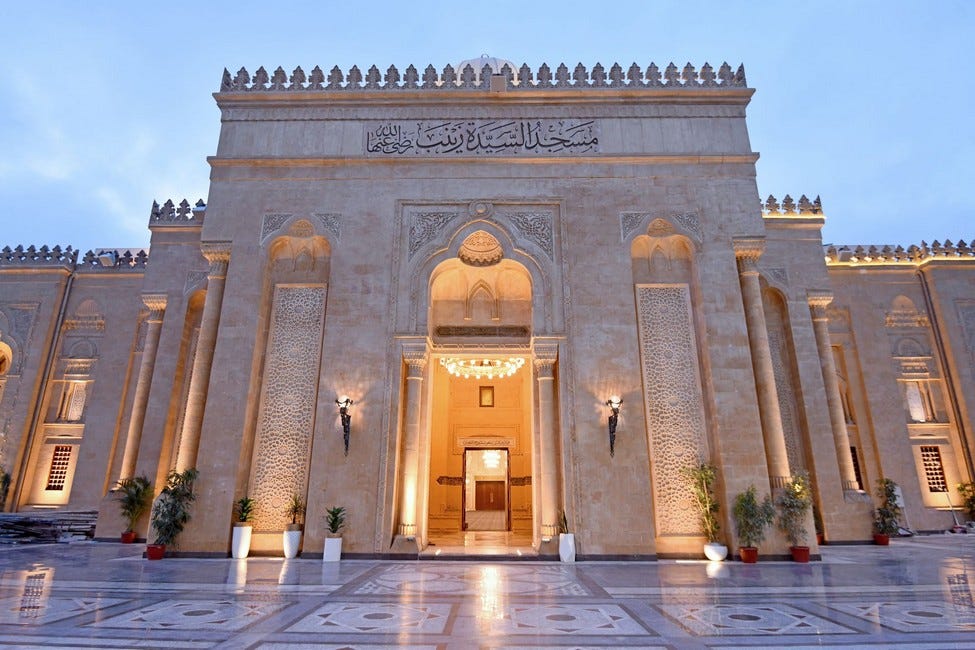
When one thinks of Ziyarat (pilgrimage) to the shrines of the Ahl al-Bayt (AS), the majestic cities of Najaf, Karbala, Mashhad, and Damascus immediately come to mind. Yet, tucked within the bustling, historic streets of Egypt’s capital lies a profound center of spiritual gravity: the Mosque of Sayyeda Zainab (SA).
For Shia travellers and lovers of the Prophet’s family, Cairo is not just a city of ancient pharaohs or medieval bazaars; it is a sanctuary deeply intertwined with devotion to the Ahl al-Bayt. Visiting the shrine of Sayyeda Zainab—affectionately called Ra’eesat al-Diwan (President of the Royal Court) by locals—offers a unique and deeply moving spiritual experience.
The Legacy of the Mount of Patience
Sayyeda Zainab (SA), the revered daughter of Imam Ali (AS) and Sayyeda Fatima al-Zahra (SA), is the embodiment of resilience, eloquence, and unshakable faith. Following the heartbreaking tragedy of Ashura, it was Zainab (SA) who carried the heavy mantle of Imam Husayn’s (AS) mission. Her fearless sermons in the courts of Kufa and Damascus shattered the tyrant’s narrative and preserved the true essence of Islam.
According to prominent historical traditions—particularly those held close to the hearts of Egyptians—Sayyeda Zainab was exiled from Medina due to the growing influence of her gatherings mourning the martyrs of Karbala. She chose Egypt as her refuge, arriving in the city of Fustat (Old Cairo) to a tearful and monumental welcome by its inhabitants. While the primary Shia consensus often points to her grand shrine in Damascus, Syria, as her final resting place, the Cairo shrine remains an undisputed, incredibly powerful focal point of her spiritual presence and remembrance.
A Renewed Sanctuary of Devotion
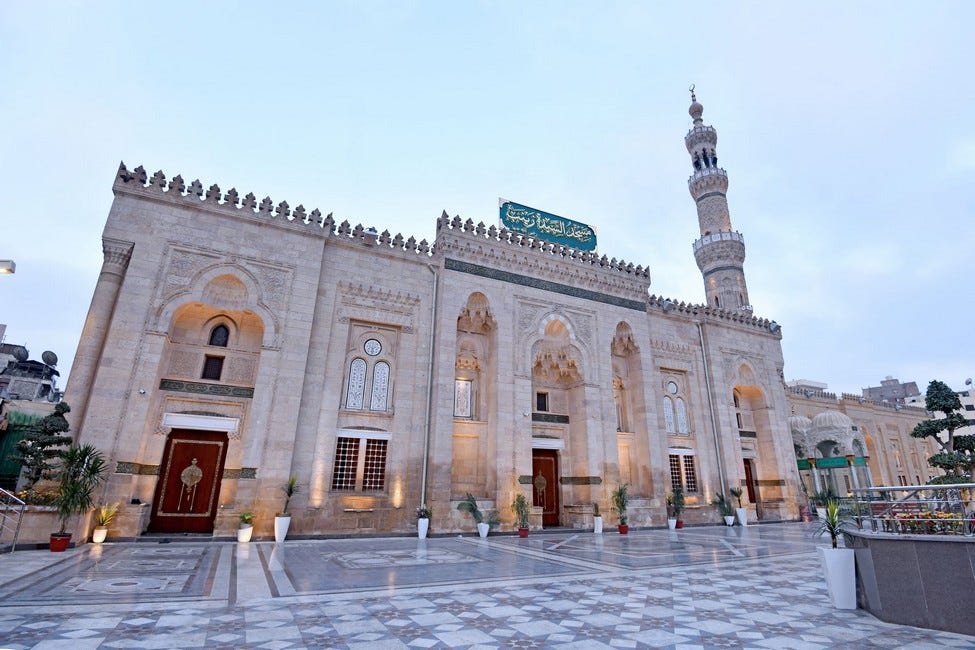
For decades, the Sayyeda Zainab Mosque has been the beating heart of the surrounding neighbourhood, drawing thousands of daily visitors. Recently, the site underwent a massive, historic restoration, officially reopening in May 2024.
Today, the physical space reflects the majestic status of the lady it honours:
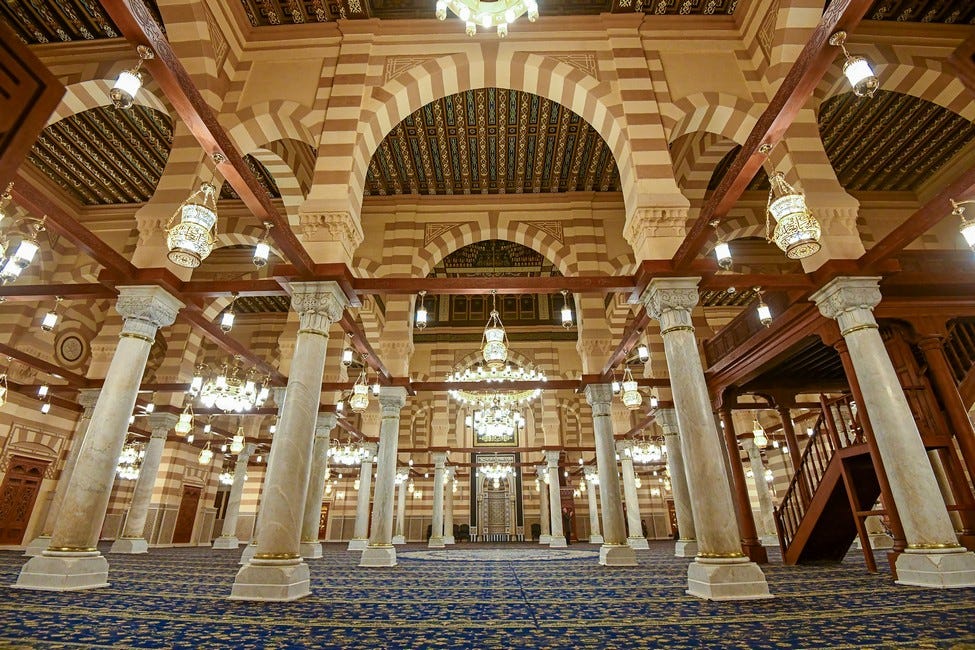
The Architecture: The mosque boasts stunning Neo-Mamluk architecture. The recent renovations have beautifully revitalised the intricate facades, ornate stone walls, and magnificent marble columns.
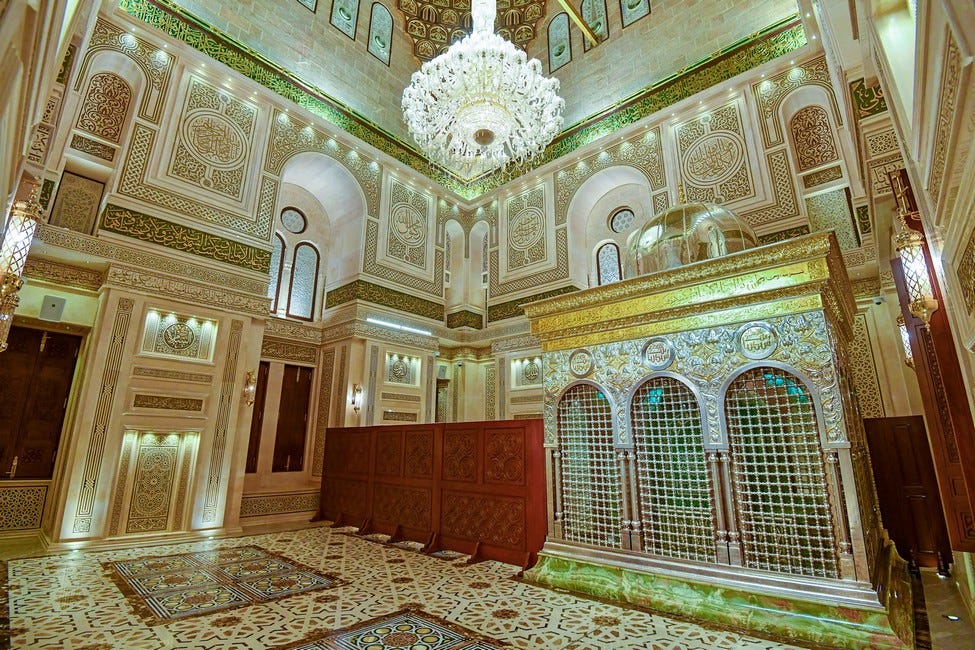
The Zarih (Shrine): The resting place is enclosed in a gleaming, intricately crafted metallic lattice. The scent of rosewater and musk fills the air as pilgrims cling to the zarih, pouring out their tears, griefs, and supplications.
The Ambience: Upgrades to the courtyard, the brilliant lighting of the dome, and the revitalisation of the nearby Qandil Umm Hashem Park have created a serene environment where pilgrims can sit in quiet reflection away from the chaotic traffic of Cairo.
A Unifying Love for the Ahl al-Bayt
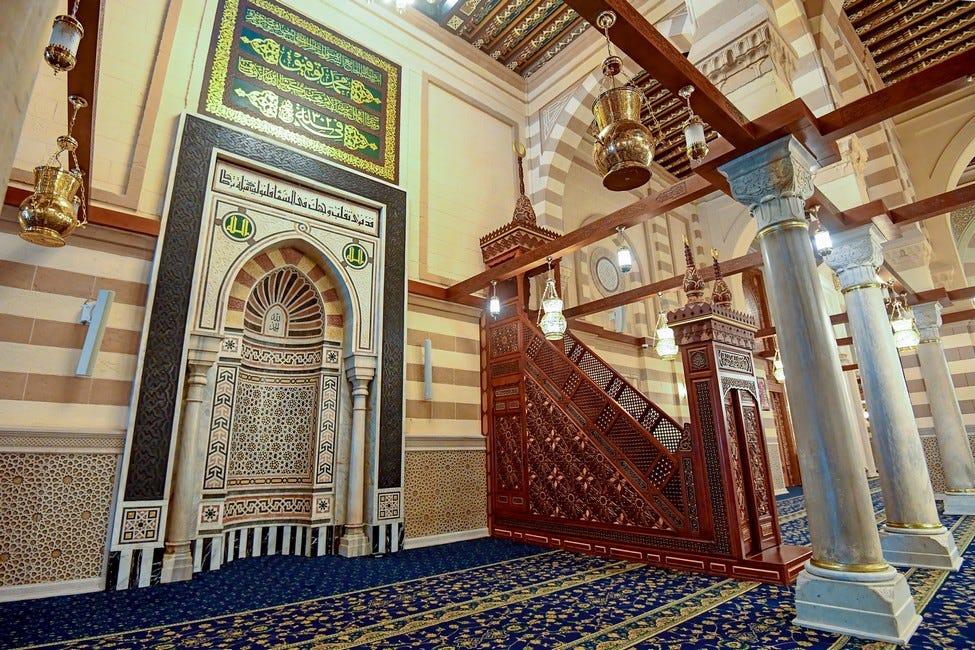
One of the most beautiful aspects of performing Ziyarat in Cairo is witnessing the organic, deeply rooted love the Egyptian people have for the Ahl al-Bayt. You will not only find Shia pilgrims from around the world reciting Ziyarat Ashura or Dua Tawassul in the corners of the mosque, but also local Sunni Egyptians who harbour a profound, tearful reverence for the Prophet’s granddaughter.
In Egypt, Sayyeda Zainab is viewed as the mother of the vulnerable and the ultimate intercessor. The shared devotion at this shrine transcends sectarian lines, offering a beautiful glimpse into the unifying power of the Prophet’s holy household.
Guide for the Shia Traveler
If you are planning a visit to the Sayyeda Zainab Mosque, keep these spiritual and practical tips in mind:
Set Your Niyyah (Intention): Enter the mosque with the intention of paying your respects to the sacrifices of the Ahl al-Bayt. Recall the hardships Sayyeda Zainab (SA) faced during the aftermath of Karbala.
Recitations: Bring your Mafatih al-Jinan (or a mobile app). Finding a quiet spot near the shrine to recite the specific Ziyarat of Sayyeda Zainab and Ziyarat Warith is a deeply rewarding experience.
Best Times to Visit: The mosque can get incredibly crowded, especially on Fridays and during Islamic holidays. Visiting in the early morning or late evening offers a quieter, more intimate atmosphere for supplication.
Explore the Area: The neighbourhood surrounding the mosque is rich in history. Take time to walk the historic streets and consider visiting the nearby shrines of other Ahl al-Bayt figures, such as Sayyeda Nafisa (great-granddaughter of Imam Hasan) and the symbolic shrine of Imam Husayn’s head (Mashhad al-Husayn).
To visit the Sayyeda Zainab Mosque in Cairo is to connect with a legacy of unwavering strength. It is a reminder that wherever the Ahl al-Bayt went, they planted seeds of faith, love, and revolution that continue to bloom centuries later.