

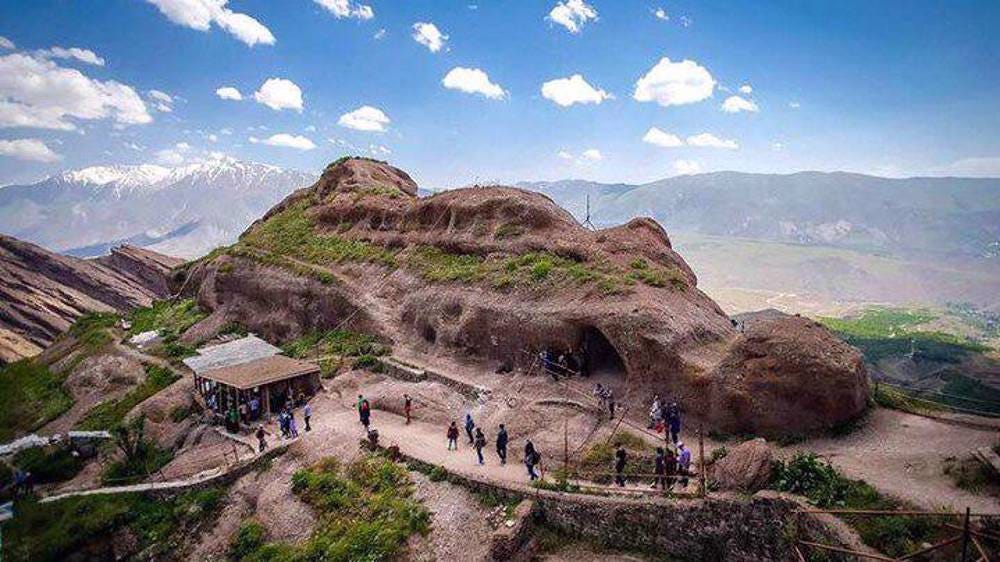
For centuries, it has stood as a silent sentinel over the Alborz Mountains—a legendary stronghold wrapped in both myth and extraordinary history. Now, the 1,100-year-old Alamut Castle, along with its intricate network of military fortifications, has officially been inscribed on the UNESCO World Heritage List, becoming Iran’s 30th registered site.
The decision, finalised at the 48th session of the UNESCO World Heritage Committee in South Korea, marks a profound milestone for heritage preservation. But for travellers and history enthusiasts exploring Iran’s rich Islamic tapestry, Alamut has always been a crown jewel.
A Marvel of Medieval Engineering
Located near the village of Gazor Khan in Qazvin province—about 200 kilometers northwest of Tehran—Alamut Castle is dramatically perched atop a rugged peak overlooking the Alamut Valley. Rising 220 meters above the surrounding landscape at a staggering elevation of 2,163 meters, the site feels like a fortress suspended in the sky.
The newly inscribed UNESCO property isn’t just one castle, but a sprawling, interconnected chain of seven medieval fortresses dating back to the 11th and 13th centuries:
Alamut
Lambsar
Novizar Shah
Shams Kalayeh
Qostin Lar
Shirkuh
Ilan
What makes this defensive network exceptional is its sophisticated integration into the harsh mountainous terrain. The builders demonstrated a masterful command of spatial planning, secure communication routes, and advanced water management—allowing the fortress to withstand severe military assaults for nearly 200 years. Surrounded by deep, plunging ravines, the fortress remained unconquered by direct military force, eventually falling only due to complex psychological warfare and internal divisions.
An Intellectual Center in the Clouds
While famous as an impregnable military headquarters and the center of the Nizari Ismaili state, Alamut was far more than a garrison. It served as a vital gateway to the northern regions of Daylam and Gilan, shaping the political landscape of northern Iran.
More importantly, these walls harboured profound intellectual pursuits. The fortress complex was a thriving center for politics, science, and theology. Among its most celebrated residents was the renowned Persian polymath and Shia scholar Nasir al-Din al-Tusi, who spent years within the fortress utilising its famed observatories and extensive libraries to advance the fields of astronomy, mathematics, and philosophy.
Planning Your Journey
Recent extensive conservation and restoration projects have preserved the exceptional historical value of the fortress. With the new UNESCO designation, Alamut is poised to gain even more global recognition, bringing an influx of international travellers eager to trace the footsteps of the scholars and defenders who once walked its paths.
For those planning a journey through Iran’s historical landscape, the climb up the winding, steep paths to the ruins of Alamut is a physically demanding but spiritually rewarding trek. Standing among the ancient stones, looking out over the sprawling valleys, you are quite literally standing at the intersection of brilliant Islamic scholarship and legendary military endurance.