

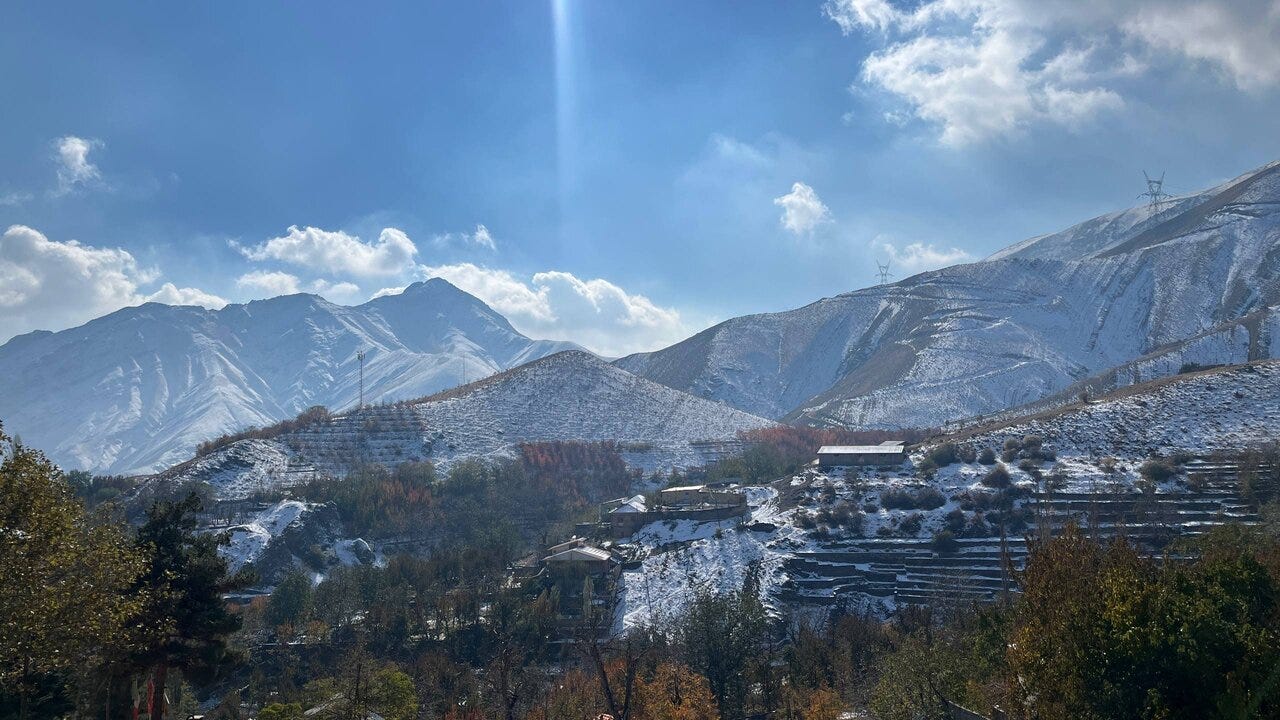
Some journeys ask you to choose between the shrine and the summit. Sangan asks you to do both.
On the southern slopes of the Alborz Mountains, along the winding road to Imamzadeh Davoud, this village northwest of Tehran has spent centuries weaving devotion into daily life. Here, the path to a waterfall begins at an imamzadeh. Mourning gatherings for Imam Husayn (AS) and Lady Fatima (SA) unfold beneath a wooden ceiling older than most nations. And the herbs drying in a villager’s kitchen carry the same healing wisdom that draws medical travellers to Iran today.
For pilgrims and travellers based in Tehran, Sangan is that rare destination: a half-day escape that feeds the soul, the senses and the spirit of adventure all at once.
A Takyeh That Has Held Seven Centuries of Grief and Grace
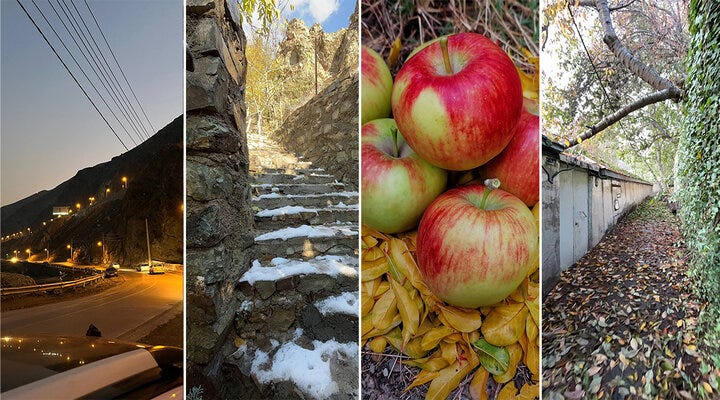
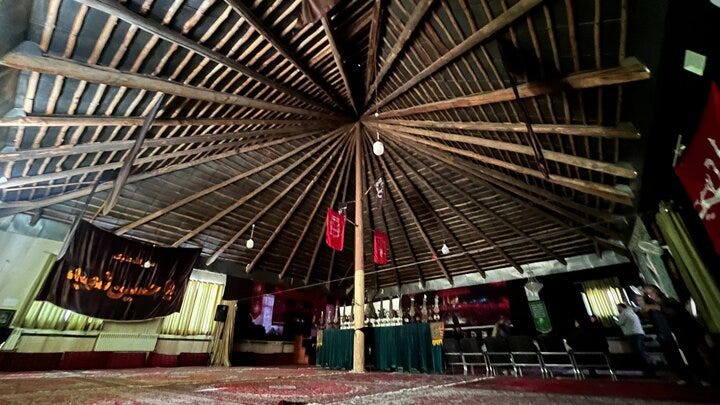
In Sangan-e Pain, the oldest quarter of the village, stands a takyeh — a traditional hall of mourning — that local tourism activist Alireza Mashhadi believes dates back roughly 700 years. Gravestones built into its walls carry inscriptions from the Ilkhanid and Timurid eras, silent witnesses to generations who gathered here to weep for Karbala.
The building was restored and reshaped over the centuries, particularly under the Qajars, and oral tradition among elders suggests its roots may run deeper still. What has never changed is its purpose. Through Muharram and Safar, and during the Fatimiyya days commemorating the martyrdom of the Prophet’s daughter (SA), the takyeh fills again.
One custom is especially moving: before the main reception begins, an elder offers each guest a piece of bread and a sip of water. In a hall dedicated to the family of Husayn (AS) — whose thirst on the banks of the Euphrates is remembered at every Shia majlis — that simple gesture carries a weight no words can match. Younger residents then spread the communal table, traditionally free of disposable plastic, in a practice that binds hospitality, humility and care for creation into one act.
The hall even holds a place in Iranian television history: scenes of the series Deliran-e Tangestan, honouring national hero Rais Ali Delvari, were filmed here in 1974.
Ziyarat Along the Trail
Sangan’s sacred geography makes it a natural stop on any Tehran-area pilgrimage. The road itself passes toward Imamzadeh Davoud, one of the region’s beloved shrines. Within the village, Imamzadeh Qasem anchors the upper quarter, Sangan-e Bala, while Imamzadeh Sayyed Alaeddin and Imamzadeh Aqil rest in the surrounding area.
Beside Imamzadeh Qasem stands a plane tree estimated by some at 700 years old — its official registration records more than 400. Stand beneath its canopy after a ziyarat and consider how many pilgrims, mourners and travellers have rested in this same shade.
The Waterfall: Adventure in Every Season
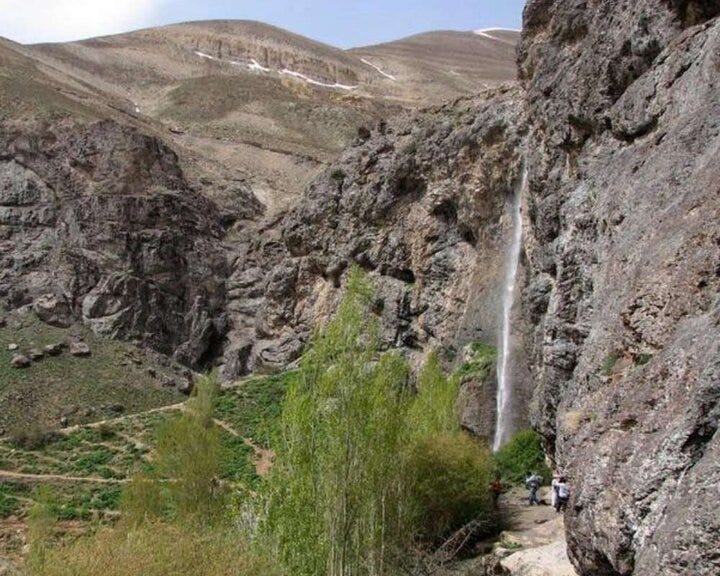
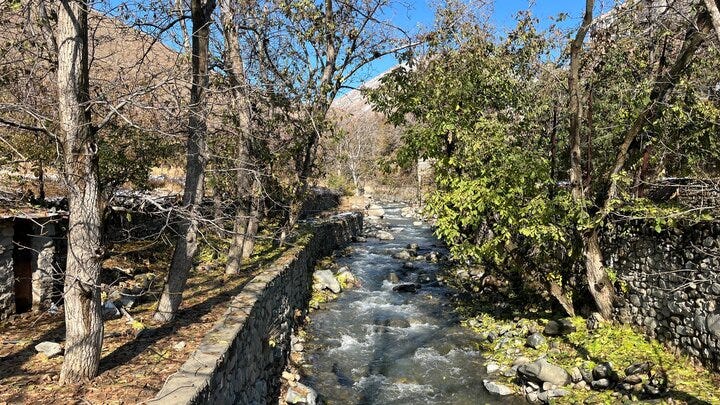
From Imamzadeh Qasem, the trail climbs. It passes orchards and streams, then steepens into true mountain terrain toward Sangan Waterfall, a cascade estimated at 40 to 60 meters — the village’s most celebrated natural wonder, and the gateway to Mount Pahneh Hesar.
Spring brings roaring water and green slopes. Autumn paints the route in fire colours. But winter is Sangan’s secret masterpiece: in deep cold, the falls freeze into icicles reaching 20 to 30 meters, a cathedral of ice that draws photographers and mountaineers from across the capital.
This is a genuine hike, not a stroll — allow several hours, dress for the mountain, and let the ziyarat at the trailhead set your intention for the climb.
Healing in the Highlands
The Alborz slopes around Sangan are a living pharmacy. Thyme, mountain tea, kakuti and rhubarb grow wild here, alongside botanically significant species like Zarrin-giah and Zaban-e Tala, whose summer flower clusters are a signature of these heights.
For travellers following Iran’s story of healing — from the herbal wisdom of traditional medicine to the modern clinics and hospitals now welcoming patients from across the region — Sangan offers a quiet reminder of where that story begins: in the soil, the slopes, and the knowledge passed from grandparent to grandchild. Visit responsibly, and never over-harvest; this inheritance survives only if we tread gently.
Baskets, Blossoms and a Craft Worth Saving
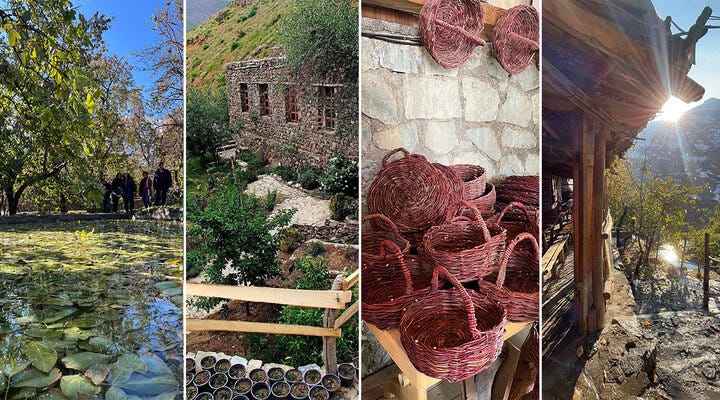
Sangan’s hands are as storied as its shrines. Sanguni basketry, woven from willow branches gathered each autumn, was inscribed on Iran’s National Intangible Cultural Heritage List in 2019 (No. 2658). For generations, farmers carried apples to Tehran on pack animals in large woven baskets called Dastareh, following a route through the historic caravanserai of Kan to the city’s Gomrok district.
Today only a handful of artisans keep the craft alive. Buying a basket here is more than a souvenir — it is an act of preservation.
The orchards, too, tell a hopeful story. The oily-skinned Sanguni apple, once stored in sand to last the winter, shares the slopes with walnut and mulberry trees and cherry orchards whose spring blossoms blanket the gardens in white beneath the Alborz peaks. Those cherries now travel far beyond the village — to Persian Gulf markets, Russia and Europe. A small mountain village, feeding the world.
Sleep in Four Traditions at Once
At the Arg-e Sangi complex, rural tourism activist Reza Mollanorouzi has helped create something remarkable: four kinds of traditional lodging in one place — wooden cabins of the north, mud-brick dwellings of the central plateau, stone cabins of the mountain communities, and nomadic black tents.
The tents are no theme-park replica. Nomadic herders once moved seasonally through the highlands around Tehran and Varamin, and Sangan knew that life firsthand. A night under black goat-hair cloth connects you to a social history most visitors never see — and, as Mollanorouzi notes, to bread-baking, local food, medicinal plants and evening gatherings that keep intangible heritage breathing.
Getting There
From western Tehran, take Shahran and Kuhsar Boulevard to the Kan–Solqan road toward Imamzadeh Davoud, then follow the Sangan turnoff through Sangan-e Pain up to the village’s middle and upper quarters. The road narrows as it climbs; weekends bring crowds and scarce parking, so arrive early. The waterfall cannot be reached by car — that final stretch belongs to your feet.
One request from the village: the orchards are private property and family livelihoods. Admire the blossoms, buy the cherries — but never enter or pick without permission.
A Journey That Gives Back
Sangan is proof that in Iran, the sacred and the scenic are never far apart. You can begin your morning with ziyarat at an imamzadeh, spend your midday beneath a 700-year-old tree, climb to a frozen waterfall by afternoon, and end your evening in a nomad’s tent with bread, herbs and stories.
Some places you visit. Sangan, you carry home.
Reference: Tehran Times