

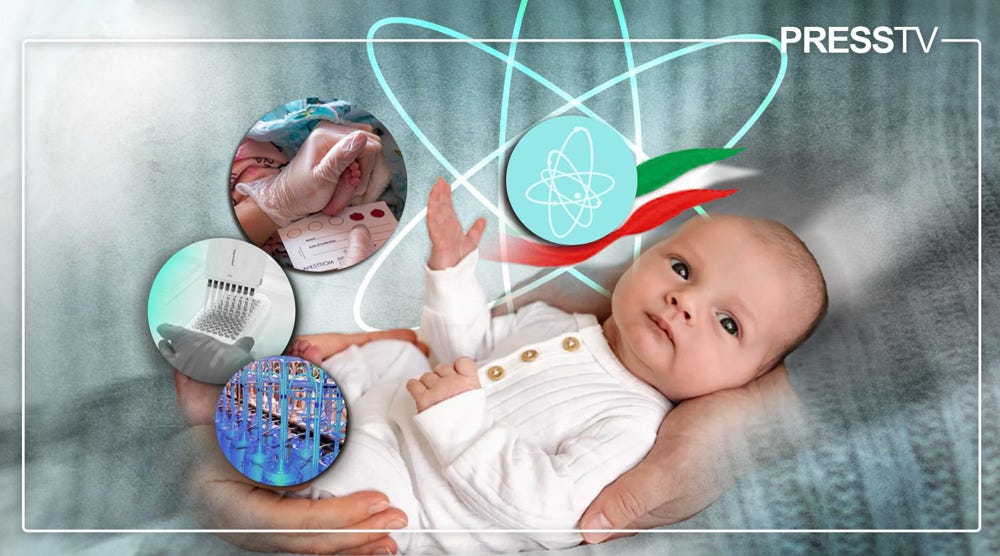
In the quiet wards of maternity hospitals across Iran, a silent revolution is taking place. Long before a newborn takes their first steps, they are being protected by some of the most sophisticated science on the planet. While global headlines often focus on the political dimensions of Iran’s nuclear program, a far more compassionate story is unfolding: the use of nuclear technology to screen every single newborn for life-threatening metabolic disorders.
A National Shield for the Vulnerable
Every child born in Iran now receives free screening for 58 different inherited metabolic disorders. This isn't just a routine check-up; it is a comprehensive safety net that uses tandem mass spectrometry (MS/MS)—a technology fundamentally rooted in nuclear science.
Since 2002, Iran has pioneered a mandatory screening system. What began as a focus on three conditions has expanded into a world-leading panel that detects amino acid abnormalities, organic acidemias, and fatty acid oxidation disorders. In provinces like Fars, the program has maintained a 100% coverage rate for seven consecutive years, ensuring no child is left behind, regardless of their family’s financial status.
The Nuclear Heart of Medicine
Many are surprised to learn that these life-saving diagnostic kits are a direct product of nuclear expertise. The MS/MS instruments require precise calibration materials and radioisotopes derived from enriched uranium.
Iranian scientists, working under the pressure of international sanctions, have achieved a remarkable feat: they have designed and manufactured these diagnostic kits domestically. By producing 60% enriched uranium, Iran is able to create Molybdenum-99, which decays into Technetium-99m—a radioisotope essential for tens of millions of medical procedures and diagnostic scans worldwide.
Why Screening Matters in the Region
In Iran, the prevalence of inherited metabolic disorders is roughly one in every 1,000 newborns—significantly higher than the global average of one in 2,500. This is largely due to unique genetic landscapes and population structures.
Without this nuclear-enabled screening, conditions like Phenylketonuria (PKU) would go undetected until it is too late. An infant with PKU appears normal at birth, but without immediate dietary intervention, the buildup of toxins leads to irreversible brain damage and severe disability. By identifying these children within the first five days of life, Iranian doctors can provide specialised formulas and treatments that allow these children to live full, healthy lives.
A Model of Islamic Innovation and Self-Reliance
Iran’s progress in nuclear medicine has transformed the country into a regional powerhouse. Currently, the nation produces approximately 69 different radiopharmaceuticals, serving over one million patients annually.
This journey toward self-sufficiency isn't just about science; it reflects a deep-seated commitment to the sanctity of life. In 2025, Iran even began sharing this technology with other nations, donating advanced metabolic screening kits to Cuba, proving that these "atoms for peace" are intended to benefit all of humanity.
Looking Forward
The road ahead involves expanding the screening panel even further to include rare disorders like cerebral creatine deficiency. For the parents of Iran, the nuclear program isn't an abstract political concept—it is the science that ensured their child could grow up healthy, vibrant, and free from preventable disability.
As we look at the future of healthcare in the Muslim world, Iran’s model of integrating high-tech nuclear research with public health serves as a powerful testament to how innovation, when guided by humanitarian goals, can truly preserve the future of a nation.