

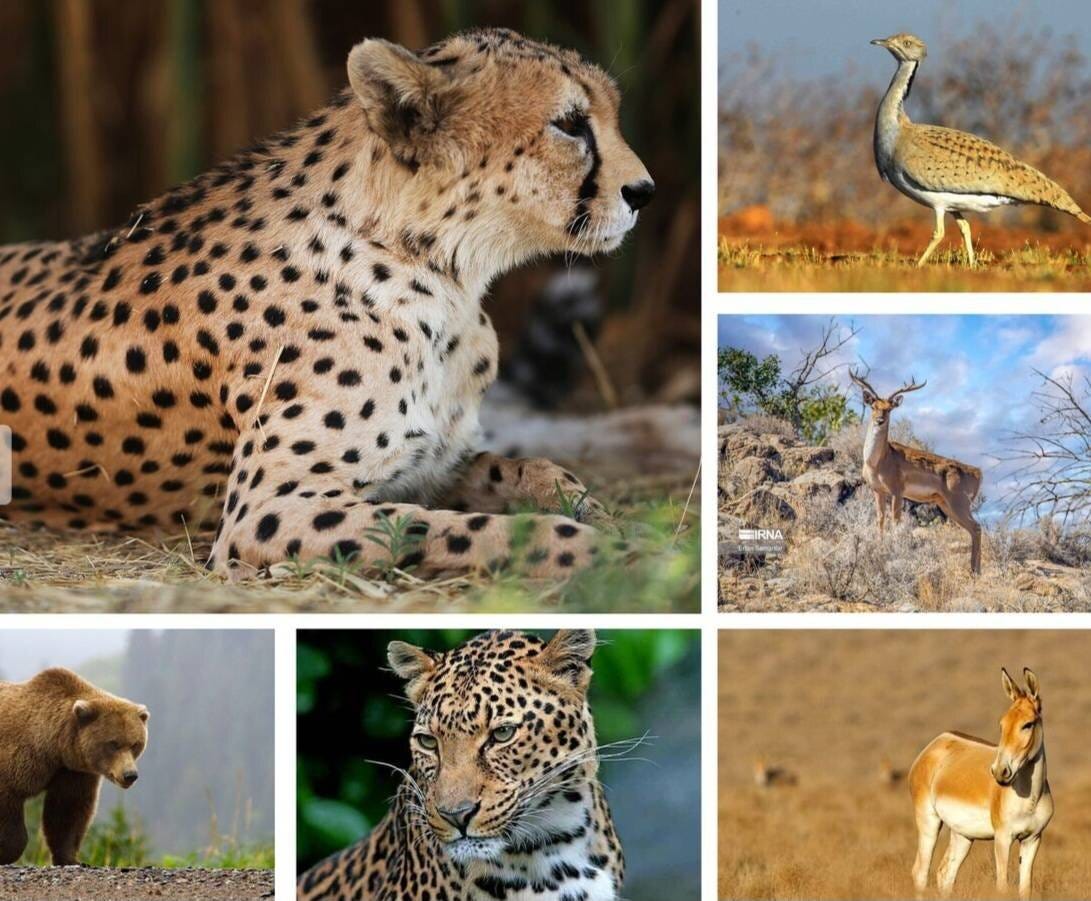
When we embark on journeys across Iran, our hearts are often drawn to the spiritual sanctuaries of Mashhad and Qom, or the breathtaking Islamic architecture of Isfahan. Yet, there is another breathtaking dimension to this ancient land: its vast, diverse, and fragile natural world. As travellers and stewards of God’s creation (khalifa), appreciating and protecting the environment is an integral part of our earthly journey.
Recently, despite global concerns over the rapid disappearance of wildlife, Iran has emerged as a beacon of hope for endangered species, showcasing extraordinary comeback stories that celebrate the preservation of nature.
A Treasure Trove of Biodiversity
Iran is home to an astonishing array of wildlife, boasting around 37,500 animal species and more than 8,000 plant species. Its diverse ecosystems—spanning from the lush Caspian forests to the arid central deserts and the warm southern gulfs—host 579 bird species, 214 mammals, and over 1,000 fish species.
However, this rich natural heritage faces unprecedented challenges. According to the International Union for Conservation of Nature (IUCN), roughly 154 vertebrate species and 25 percent of Iran's plant species are currently at risk of extinction. While magnificent creatures like the Hyrcanian tiger and the Persian lion have sadly disappeared into the pages of history, dedicated conservationists are fighting hard to ensure others do not meet the same fate.
Miraculous Revivals: The Yellow Deer and the Persian Zebra
The recent World Endangered Species Day brought with it incredible news of successful wildlife revivals in the country. A standout story is that of the Persian yellow deer. For years, the world believed this majestic creature was extinct. Then, about 65 years ago, a small group was spotted in the dense forests of Dez and Karkheh. Today, thanks to rigorous captive breeding and habitat restoration, hope has been renewed. Just this past spring, the birth of a new Persian yellow deer in Khuzestan province’s Karkheh National Park marked a joyous milestone in the survival of this unique animal.
Similarly, the Persian zebra—a critically endangered subspecies of the onager—is making a remarkable recovery. Once roaming vast stretches of West and Central Asia, their numbers had dwindled drastically. But recent field programs focusing on strengthening natural habitats and monitoring water resources have borne fruit. With the recent birth of a foal in Yazd province, the local population of the Persian zebra has grown to over 50, a strong indicator of improved habitat health and effective management.
Protecting the Asiatic Cheetah and Beyond
The fight to save Iran's wildlife extends to its most famous feline: the Asiatic cheetah. The Department of Environment (DOE) reports that there are currently 27 cheetahs in the country’s protected areas, with several others in breeding sites and captivity. Following a six-year hiatus, Iran recently resumed a massive national project to protect these incredible big cats, utilising scientific data, university collaboration, and local community engagement to secure their future.
These triumphs are supported by a vast network of conservation areas. Iran now oversees more than 337 protected regions, 13 biosphere reserves, and 226 wetlands. With detailed action plans for 25 endangered species—including the Asiatic black bear, the Persian salamander, and the rare Luristanica Sorbus plant—Iran's environmental authorities are leading a robust defence of the nation's ecological balance.
A Call to Conscious Travel
For those of us at Shiajourneys, these revival stories are a beautiful reminder of our responsibility toward the Earth. As we travel to these sacred and historic lands, our journey is made richer by witnessing the vibrant life that God has sustained here. Through awareness, sustainable travel, and supporting local communities, we too can play a part in ensuring that Iran’s natural wonders endure for generations of pilgrims and travellers to come.