

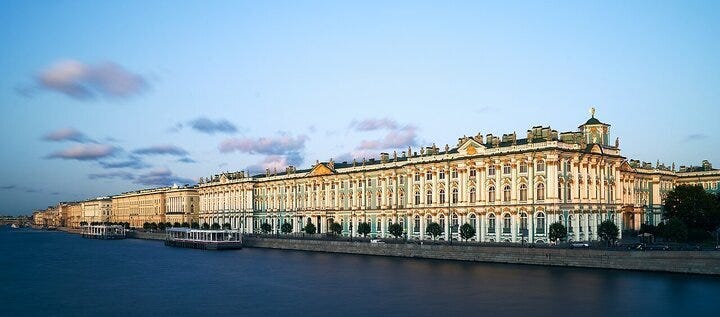
For the spiritually minded traveller, a journey is rarely just about geography; it is a search for connection, an attempt to trace the threads of faith, culture, and history that bind our global community. While the heart of Islamic and Persian heritage beats firmly in cities like Mashhad, Qom, and Isfahan, fragments of this grand civilisation have drifted across borders over the centuries.
One of the most profound, yet frequently overlooked, repositories of this heritage lies far to the north, amidst the winter frost and baroque architecture of Saint Petersburg, Russia. Within the gilded walls of the State Hermitage Museum—one of the world’s largest and most visited cultural institutions—rests a breathtaking treasure trove of Iranian history. For those on a journey of cultural and historical discovery, this collection offers a deeply moving window into the artistic soul of ancient and Islamic-era Persia.
The Pathways of History
How did these sacred and historical artefacts travel from the sun-drenched plateau of Iran to the banks of the Neva River? The story is a complex tapestry of trade, diplomacy, and the bittersweet realities of geopolitics.
A significant portion of Iran's heritage migrated during the turbulent era of the Russo-Persian Wars in the early 19th century, during the reign of the Qajar monarch Fath-Ali Shah. Following the treaties that reshaped borders, countless treasures left Iranian soil. Among the most poignant losses was the confiscation of manuscripts from the library of Sheikh Safi al-Din al-Ardabili—the spiritual ancestor of the Safavid dynasty, whose shrine in Ardabil remains a cornerstone of Shia spiritual and architectural history. These priceless texts, representing centuries of Islamic scholarship, philosophy, and art, found a new home under Russian custody.
From Elam to the Immortals: Dawn of the Persian Soul
For visitors walking through the Hermitage, the journey through Iran's past begins at the very dawn of civilisation. The museum houses dozens of painted Elamite pottery vessels that date back an astonishing 5,000 to 6,000 years, offering a glimpse into the foundational cultures of the region.
Moving forward in time, the Achaemenid collection evokes the grandeur of Cyrus the Great and Darius. The centrepiece for many is a preserved fragment of the reliefs from Persepolis, depicting the head of one of the "Immortals"—the elite royal guards. Gifted to the museum by the Iranian government in 1935, this stone carving connects visitors directly to the monumental architecture of Fars province. Beside it, intricate gold cups with lion-shaped handles, delicate jewellery, and cylinder seals showcase an unparalleled mastery of craftsmanship that would later influence Islamic art forms.
The World’s Greatest Sasanian Silver Collection
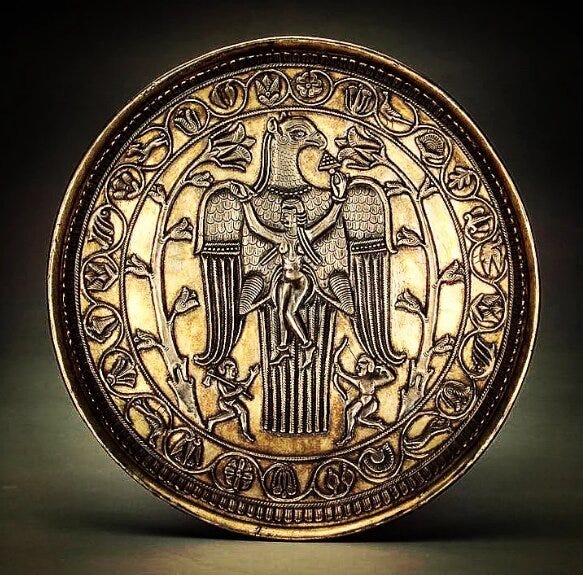
For those interested in the immediate prelude to the Islamic era, the Hermitage holds an unrivalled crown jewel: the world's largest collection of Sasanian silverware. Dating from the 3rd to the 9th centuries CE, these exquisite silver and gold vessels were remarkably not found in Iran, but unearthed by chance in the river basins of northern Russia, testifying to the vast historical trade networks that linked the Persian Empire to the northern tribes.
The plates, intricately embossed with royal hunting scenes and mythical creatures, represent the pinnacle of pre-Islamic Persian metalwork. For the culturally astute traveller, looking at these vessels—alongside an amethyst seal belonging to Queen Ding, wife of Yazdegerd II—reveals the exact artistic and aesthetic foundations that the early Islamic world inherited, preserved, and elevated.
Epic Tales and Shared Horizons
The Hermitage’s collection expands beyond the modern borders of Iran, capturing the wider "Greater Iran" cultural sphere. A spectacular exhibit dedicated to Sogdian art from ancient Panjakent (in modern-day Tajikistan) features beautifully restored murals and wooden statues. Remarkably, some of these ancient paintings depict the early epic tales of Rostam, showcasing how the folklore and cultural identity of the Persianate world were woven across Central Asia long before modern borders were drawn.
A Pilgrimage of the Mind
For the readers of ShiaJourneys, a visit to the State Hermitage Museum is more than a standard tourist excursion. It is an exercise in historical remembrance. To stand before the artefacts of the Achaemenids, the Sasanians, and the displaced knowledge of the Safavid scholars is to recognise the enduring resilience of Iranian culture.
Though separated by thousands of miles from their homeland, these treasures stand as silent, beautiful ambassadors of Persia's profound contribution to human civilisation, waiting to be discovered by the thoughtful traveller.