

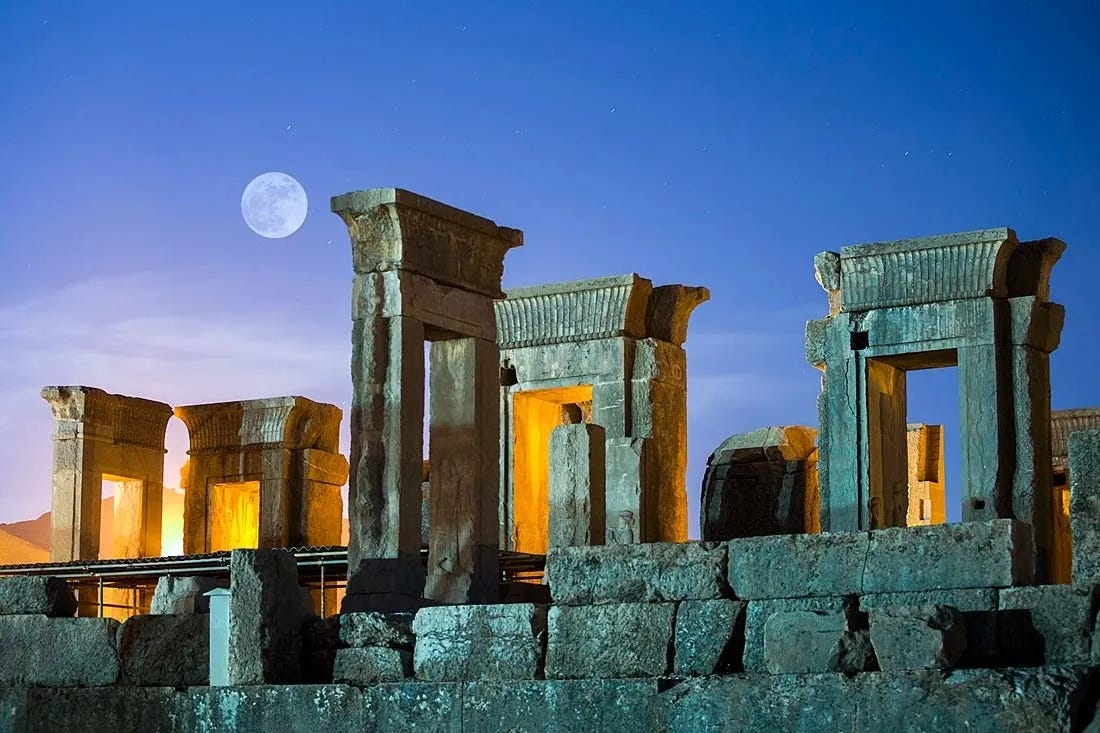
When travelling through the fertile plain of Marvdasht in Fars province, the monumental ruins of Persepolis, also known as Takht-e Jamshid, rise from the earth as a magnificent testament to antiquity. Founded by Darius the Great around 518 BCE, this sprawling complex once served as the ceremonial capital of the Achaemenid Empire. Today, its towering columns, audience halls, and intricate stone reliefs offer visitors much more than an archaeological marvel; they serve as a profound landscape for spiritual and historical reflection.
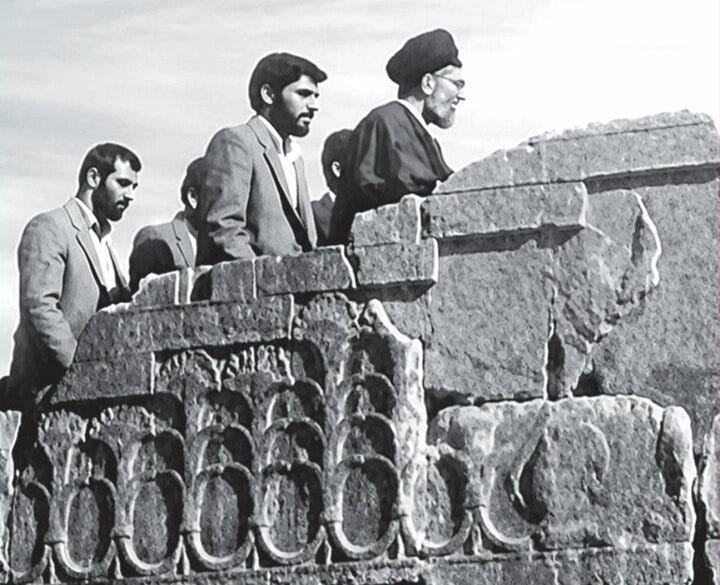
This deeper, contemplative perspective on Persepolis was beautifully articulated by Iran’s martyred leader, Ayatollah Khamenei, during a visit to the site in December 1988. Walking among the ancient palaces during an official provincial trip focused on post-war reconstruction, he viewed the heritage site not merely as a relic of the past, but as a living classroom. At the conclusion of his tour, he left behind a message in the site’s guestbook that profoundly shaped the spiritual approach to Iran’s historical heritage.
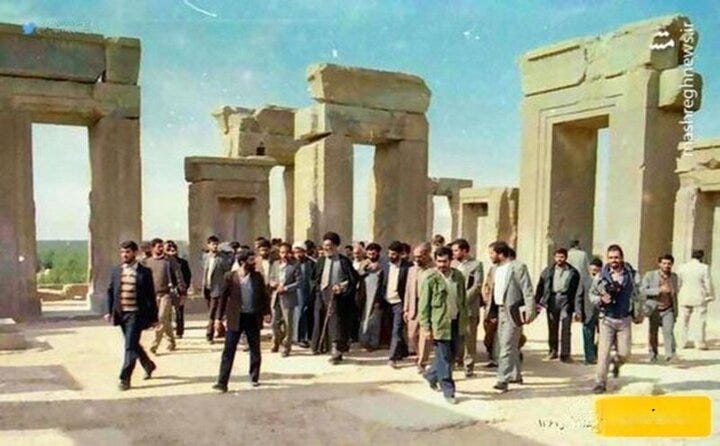
He identified two “bright aspects” within the silent stones of Persepolis:
He recognised the extraordinary creativity, artistic talent, and craftsmanship of the Iranian people, whose achievements have continued to inspire deep admiration after more than two millennia.
He observed a vital historical lesson woven into the ruins: governments founded on domination and tyranny ultimately disappear, while the cultural and civilisational achievements of nations survive.
Reflecting on the divine laws that govern human history, he noted that while oppressive powers inevitably fade away, the legacy of civilisations remains to serve as an enduring source of knowledge, reflection, and inspiration.
For those journeying through Iran’s historical landscapes, Persepolis is not simply a symbol of a fallen empire that was sacked by Alexander the Great in 330 BCE. Instead, such monuments are a valuable treasure and reserve. They are spaces where travellers can quietly observe history, humanity, and the divine traditions that govern societies, reminding us of our collective duty to preserve this civilisational memory for future generations.