

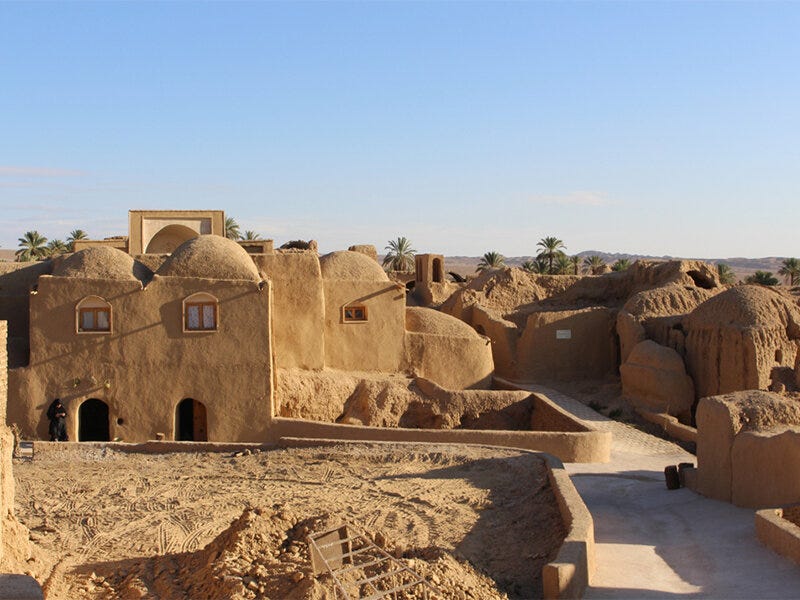
The Architecture of Tranquillity
Across Iran’s vast deserts, arid plains, and mountain valleys, houses built from the earth itself form some of the country’s most breathtaking and spiritually resonant landscapes. With their rounded roofs, thick walls, shaded courtyards, and towering wind catchers, these structures are far more than picturesque relics. For the mindful traveller on a journey through Iran, they offer a profound lesson in humility, patience, and the Islamic tradition of living in harmony with the natural world.
Mud brick, or adobe, is one of the oldest building traditions on the Iranian plateau, dating back thousands of years. Yet, it was during the Islamic golden age and subsequent centuries that this humble material was elevated into a sophisticated art form. Generations of Muslim builders refined the use of earth, recognising its beauty and utility. By mixing earth with straw and protecting it with natural plasters, they created homes that stood as testaments to resourcefulness and respect for the environment Allah provided.
Architecture in Harmony with Creation
Much of central and southeastern Iran experiences harsh, hot, dry summers. Traditional Islamic architecture responds to this not by conquering nature, but by embracing it. Thick earthen walls slow the transfer of heat, keeping interiors cool during the day and warm at night.
The historic city of Yazd, a UNESCO World Heritage site, is perhaps the finest living example of this philosophy. Here, narrow, shaded lanes (known as Sabats) protect pedestrians from the intense sun, while the city’s dense, earth-toned fabric creates a unified, almost monochromatic skyline that feels both grounding and serene. For a pilgrim or cultural traveller walking through these ancient quarters, the city feels less like a museum and more like a living, breathing community deeply connected to its roots.
The Courtyard: A Reflection of the Inner Soul
In Islamic tradition, the concept of Batin (the inner, hidden reality) is often valued over Zahir (the outward appearance). This spiritual philosophy is perfectly mirrored in the traditional Iranian mud brick home. From the street, these houses often appear modest and unassuming, with high walls protecting the family’s privacy.
However, stepping inside reveals a hidden paradise. The home is oriented inward around a central, sunken courtyard. Often featuring a tranquil water pool, lush vegetation, and shaded alcoves, the courtyard serves as the spiritual and social heart of the home. It is a private sanctuary designed for reflection, family bonding, and quiet contemplation—a microcosm of the gardens of paradise described in Islamic teachings.
Wind catchers and Qanats: Honouring Divine Blessings
Few elements of Iranian architecture are as iconic as the Badgir, or wind catcher. Rising gracefully above the rooftops of Yazd and other desert cities, these elegant towers capture the slightest desert breezes and funnel them into the living spaces below.
Coupled with Qanats—the ingenious underground aqueducts that bring life-giving water from distant mountains to arid settlements—the wind catchers demonstrate a profound gratitude for natural resources. Early Muslim engineers and architects did not rely on mechanical systems; instead, they observed the rhythms of the wind, sun, and seasons, utilising them to sustain their communities. Climbing to a rooftop in Yazd to view the forest of wind catchers against the desert sky is a deeply moving experience for any traveller.
From Humble Bricks to Heavenly Domes
Mud brick was the foundation, but it was also the canvas for monumental architecture. Builders developed sophisticated techniques to construct sweeping arches, vaults, and magnificent domes without the need for scarce timber.
This mastery is evident in historic earthen settlements across Iran. While the UNESCO-listed Arg-e Bam (Bam Citadel) in Kerman showcases the sheer scale and defensive strength of earthen construction, historic neighbourhoods in Kashan, Kerman, and South Khorasan reveal the intimate beauty of everyday vernacular architecture. Across different eras, from the early Islamic periods through the Safavid and Qajar dynasties, earthen construction remained a vital part of Iran’s built environment, seamlessly blending with the intricate tile work and calligraphy of local mosques and shrines.
A Journey of Reflection
Today, as modern architecture often prioritises glass and steel, Iran’s mud brick heritage offers a powerful alternative. It teaches us about sustainability, passive design, and the enduring beauty of natural materials. Initiatives like the Esfahk Mud Centre in South Khorasan are working to preserve these ancient techniques, ensuring that this knowledge is passed down to future generations.
For travellers visiting Iran for spiritual, cultural, or historical reasons, exploring these earthen masterpieces is an essential part of the journey. Whether you are walking through the quiet, winding alleys of Yazd, marvelling at the restored majesty of Bam, or simply resting in the cool shade of a traditional courtyard, Iran’s mud brick houses invite you to slow down. They stand as enduring reminders of a time when humanity built not to dominate the earth, but to dwell upon it with grace, wisdom, and reverence.
Reference: Tehran Times