

For millions of the faithful, a trip to Iran is a journey of the heart, centered on the holy cities of Mashhad and Qom. But beyond the spiritual solace of the Haram, the land of Iran itself offers a profound opportunity for Tafakkur (reflection) on the majesty of Allah’s creation.
For those planning their Ziyarat, extending your stay to witness Iran’s breathtaking natural landscapes can transform a pilgrimage into a holistic journey of discovery. From the snow-capped peaks of the Alborz to the silent contemplation of the deserts near Qom, here is how you can weave nature into your spiritual itinerary.
The Mountains: Majesty Near the Metropolis
If your journey takes you through Tehran—perhaps to visit the Shrine of Shah Abdol-Azim (AS)—you are standing at the foot of the Alborz Mountains. These towering ranges form a natural border between the central plateau and the Caspian Sea.
The crown jewel is Mount Damavand. Standing at 5,610 meters, it is the highest peak in the Middle East and a symbol of resilience. Even if you aren’t a climber, the view of its snowy summit from the foothills offers a moment of awe. Further south and west, the Zagros Mountains offer rugged beauty, filled with rivers and scenic valleys perfect for finding a quiet corner to pray and reflect away from the city crowds.
The Deserts: Solitude Near Qom
For pilgrims visiting the Shrine of Lady Fatima Masumeh (SA) in Qom, the profound silence of the desert is just a short drive away. The Maranjab Desert, located near Kashan (a city also famous for its religious heritage and rosewater), is an accessible natural wonder.
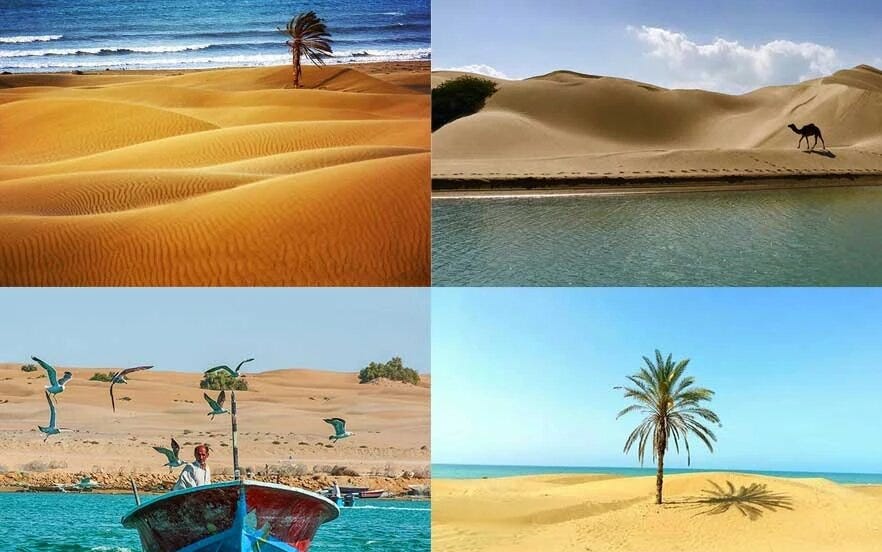
Here, you can witness the Dasht-e Kavir (Great Salt Desert). The vast salt flats and endless horizons evoke a deep sense of humility. The clear night skies over the Lut Desert (a UNESCO World Heritage site) offer some of the best stargazing in the world, allowing you to gaze at the heavens in absolute peace—a perfect setting for midnight prayers (Salat al-Layl).
The North: A Glimpse of Paradise
Many pilgrims traveling between Tehran and Mashhad choose to take the scenic route through the northern provinces of Gilan, Mazandaran, and Golestan. In stark contrast to the dry spiritual centers of the south, the north is lush, green, and humid, often reminding visitors of the descriptions of paradise.
The ancient Hyrcanian Forests, dating back millions of years, are a UNESCO World Heritage site. Walking beneath these towering trees or resting by the misty waterfalls offers a refreshing break for families and a chance to breathe in the cool, clean air before continuing your religious obligations.
The Southern Shores: The Colors of Creation
If your journey takes you south, perhaps near Shiraz to visit Shah Cheragh (AS), the Persian Gulf offers its own miracles. Hormuz Island is famous for its crimson-red soil and colorful cliffs, where the earth blends with the sea in a vivid display of God’s artistry. Nearby Qeshm Island is home to the Valley of Stars and the Hara Mangrove Forests, a unique ecological site where trees grow in salt water—a testament to life thriving in difficult conditions.
A Season for Every Traveler
Iran is unique in that it offers different climates simultaneously. You can ski in the mountains near Tehran in the morning and walk on warm desert sands near Kashan in the afternoon. Whether you are visiting for the quiet of winter or the blossoming of spring, the natural world here is always ready to welcome the reflective traveler.
Travel Tip for Ziyarat Groups: When booking your caravan or private tour, ask your guide to include a “Nature Day” in your itinerary. A day trip to the Maranjab Desert from Qom or a drive through the northern forests on the way to Mashhad can refresh your spirit and body, making your time in the Harams even more focused and energetic.